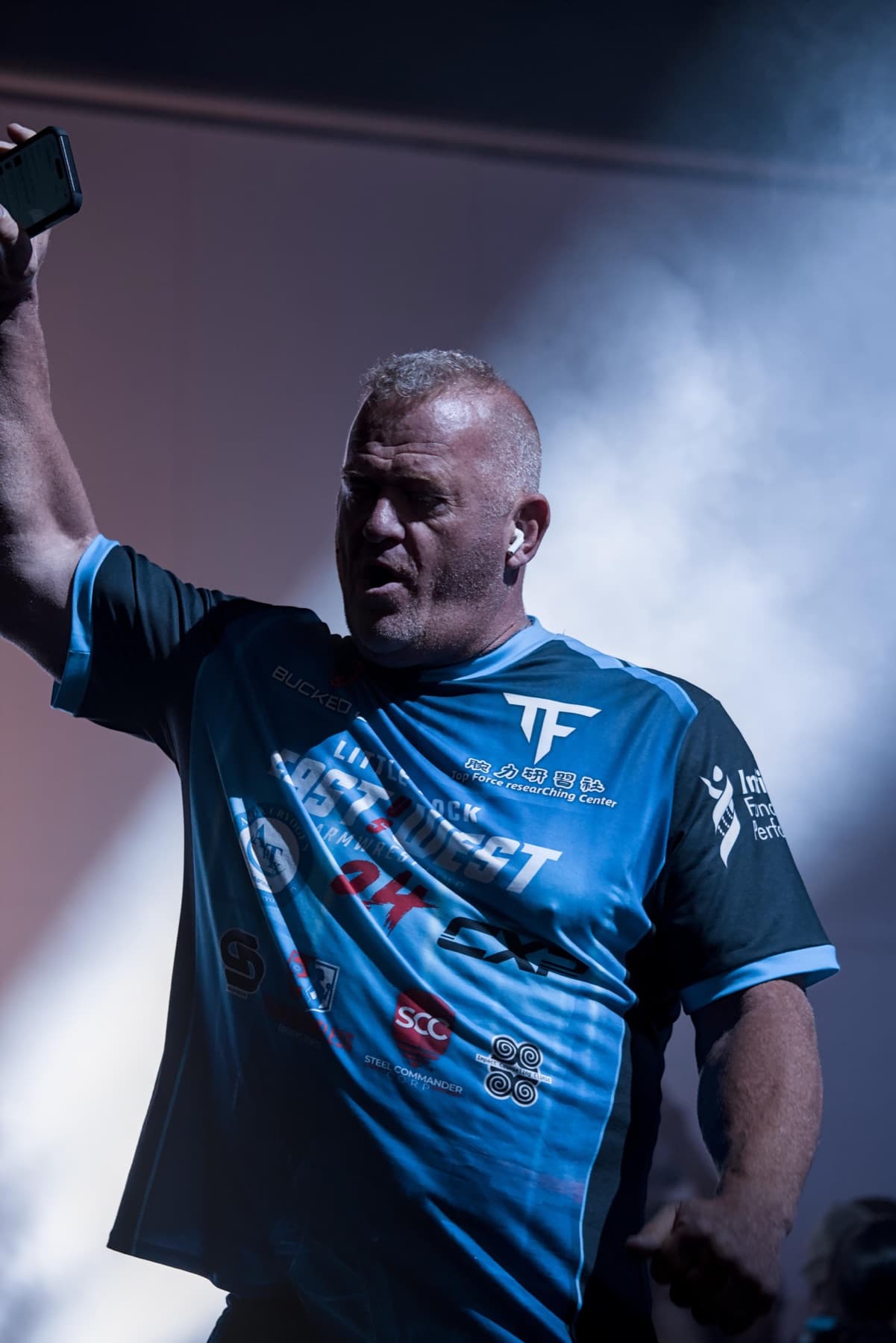
Where armwrestling actually happens
Armwrestling runs on two things: a handful of events everybody watches, and a practice room in somebody's garage on a Tuesday night. The second one is where the sport is actually built, and almost nobody films it. This channel films both, from the biggest armwrestling table in the world down to a club night with six people at it.
The circuit
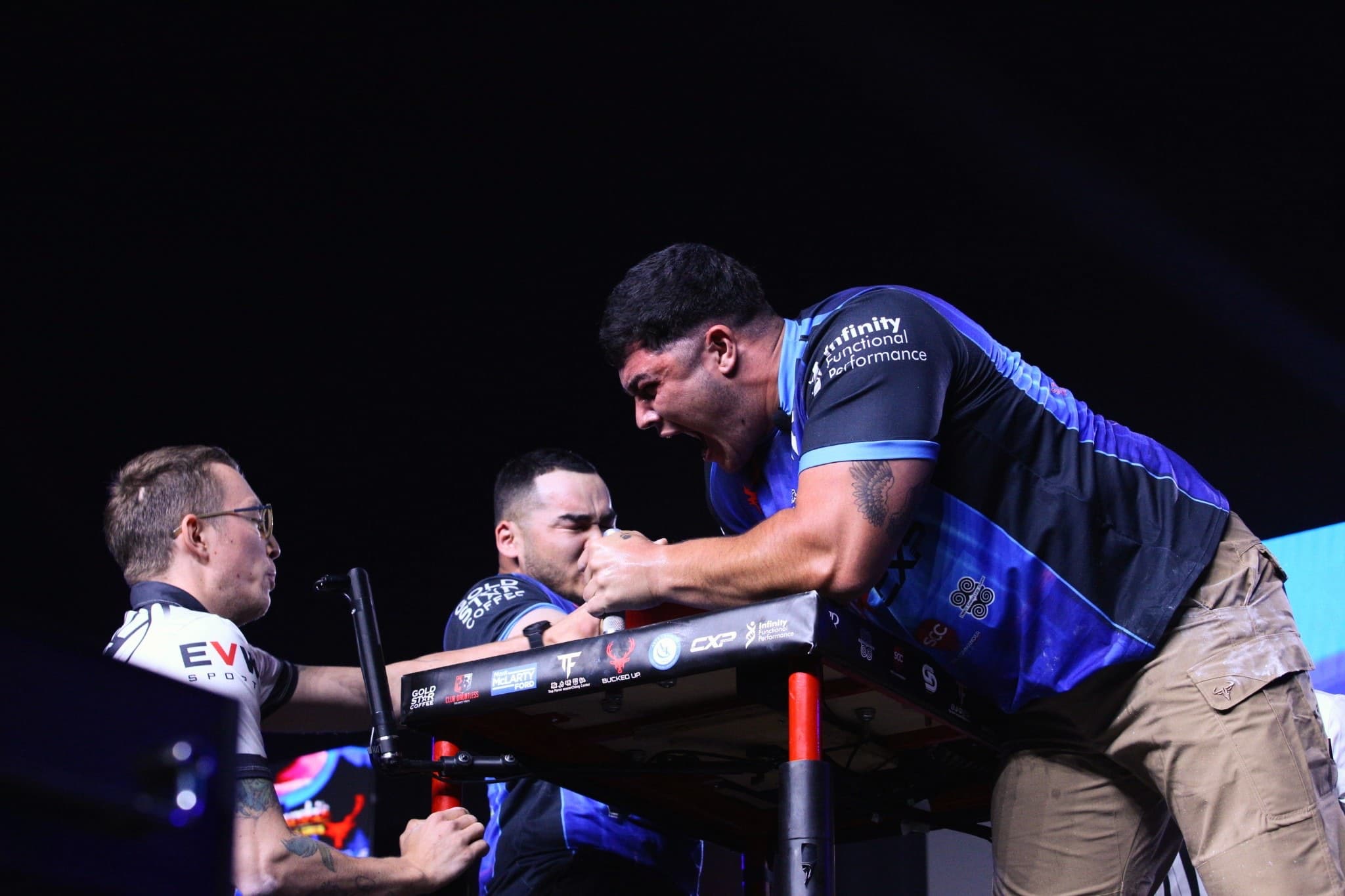
Armwrestling events run from a booked supermatch on pay per view down to a bracket in a function room. The channel turns up to all of it, and what it does at each is different.
International supermatch series
East vs West
The biggest table in the sport. Booked one-on-one matches between named competitors rather than a bracket, run as a pay per view.
Coverage
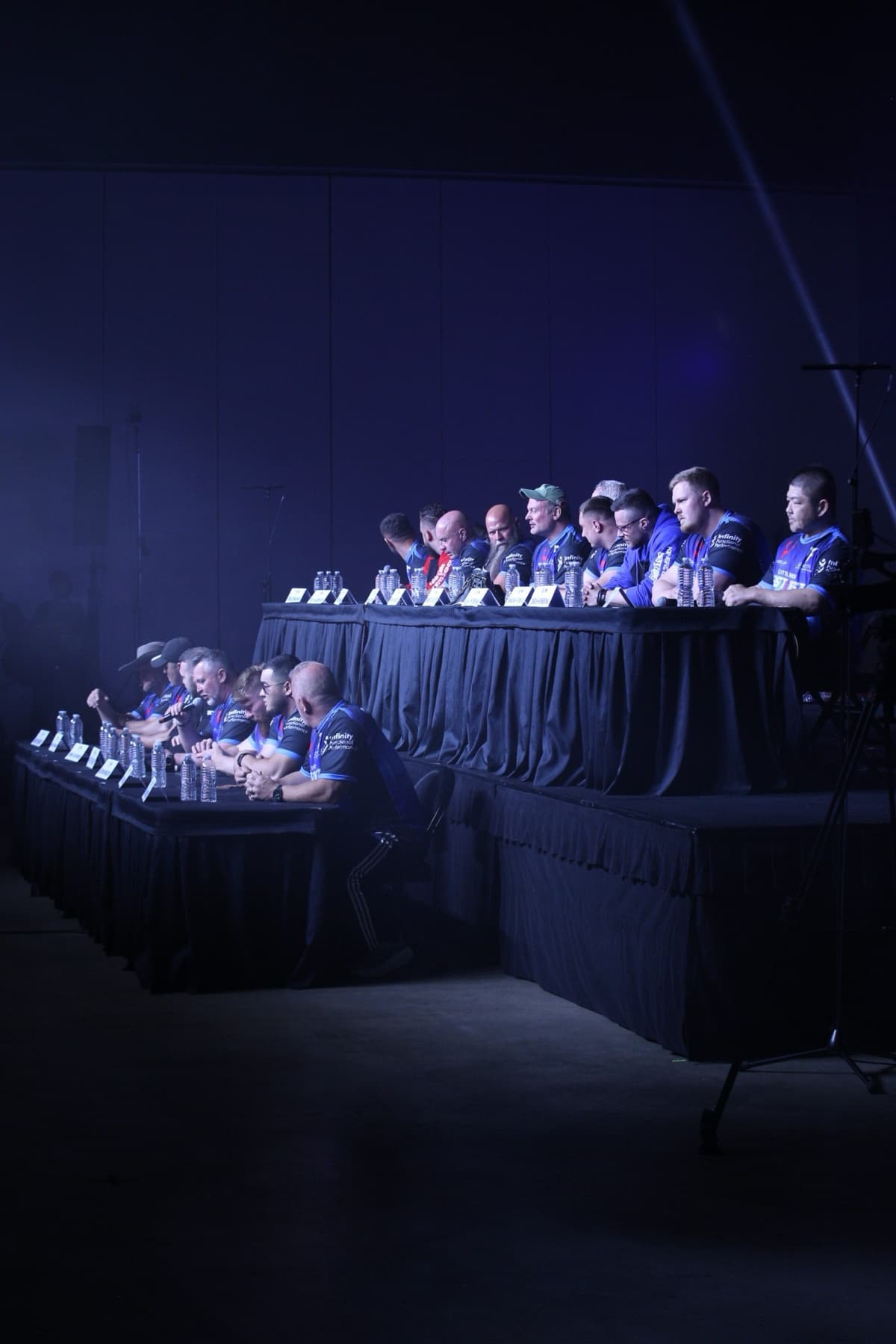
Credentialed behind the scenes at EVW 24 in Little Rock. Press day, walk outs, and the photography on this site.Regional tournament
Stonewall's Super Brawl
Bracket competition close to home, and the kind of event where most competitors actually start.
Coverage
Tournament highlights and individual supermatches, cut and posted match by match.Every week
Practice night
Not an event, and the most important fixture on this list. It is where the sport is actually built, and almost nobody films it.
Coverage
1,115 shorts and counting.No dates here on purpose. Fixtures move, and a calendar nobody updates is worse than none: a passed event at the top of a page tells you the site is abandoned. Next dates go out on the channel and to the list.
Who pulls here
An armwrestling club is a few people, one table, and a night of the week. That is the whole sport, repeated until somebody films it.
- Team Dirty SouthThe Southeast
The home table. Practice night here is where the shorts come from, and where most of the channel's shorts were shot. One of the two teams James pulls for.
- Team Georgia Walls of PowerGeorgia
The other team James pulls for, and the state his own ranking came out of.
Running a club or an event?
A tournament with no footage may as well not have happened. If you are organising something in reach, or you run a table that should be on camera, say so.
There is no single rulebook
That is the first thing to know about armwrestling rules, and it surprises people. Associations and promotions run different rules, and a competitor who moves between them has to relearn the details every time.
So what follows is the common ground, in plain language, and then the places the books actually disagree.
Two things worth knowing before you read any of it. Almost everybody writes it as two words, arm wrestling, right up until they start competing. And it sits inside a wider family of arm sports and grip sports that share most of their training: what is below is specific to the table.
This is the common ground in plain language, not a rulebook. Every association and every promotion publishes its own, and the only one that binds you is the one your event is run under. Read that one. On the day, the referee's call is the ruling.
The common ground
01The grip
Palms flat together, thumbs hooked, and the thumb knuckle has to stay visible to the referee. Wrists straight, arms centred on the table, shoulders square to it. The free hand grips the peg at the edge of the table and does not let go.
Watch for
If the referee cannot see your thumb knuckle, you do not have a legal grip yet. The match has not started, no matter how set you feel.02The start
The head referee sets the grip, then calls Ready, then Go. Nothing before Go counts. Nothing after Go stops until the referee says Stop.
Watch for
Twitching early is a false start, and two of them cost you the match. The strongest arm in the room loses to a clock it cannot beat.03How you win
You win by pinning: any part of your opponent's arm from the natural wrist line to the fingertips touches the pad, or goes below it, on your winning side.
Watch for
There is no winning in the middle. The neutral zone is the space between the pads below pin height, and nothing that happens there ends a match.04The fouls
The elbow leaving the pad. Dropping the shoulder below the level of the pad. Crossing the centre line with your shoulder. Touching your own chin, head, or shoulder to your hand. Letting go of the peg. Slipping out on purpose.
Watch for
Two warnings make a foul, and two fouls make a loss. Most matches at a local tournament are lost on the elbow, not on strength.05Slips and the strap
When hands come apart without anybody meaning it, the referee straps the wrists together with a one-inch strap, palms still flat together, and restarts. The strap sits no more than an inch below the natural wrist line.
Watch for
A strap match is a different sport. Nobody is getting out of this grip, so it turns into a pure test of who can hold an angle longest.06The officials
Two referees on every match: a head referee at the table who sets the grip, starts it, and makes the call, and a second referee watching the other side of the arm. Black and white stripes, and no opinions about who should win.
Watch for
Watch the referees rather than the arms sometime. They are crouched at pad height because the pin is decided in about a centimetre.Where the books differ
The table
Height, pad size, peg position, and grip pad dimensions are not universal. A table you have trained on for a year can feel wrong at an event run under a different book.
Straps
When a strap goes on, how far below the wrist it sits, and whether a match can be started strapped at all rather than only after a slip.
Starts and fouls
How many warnings become a foul, how many fouls become a loss, and how strictly the elbow and the shoulder are policed. This is the difference competitors actually feel.
Format
Single elimination, double elimination, or a booked best-of supermatch. Weight classes and whether both arms are pulled vary by association too.
The vocabulary
Enough to follow a match and read the comments.
- Toproll
- Attacking the hand. You climb your opponent's fingers, open their grip, and beat them at the wrist before you ever move the arm.
- Hook
- The opposite. You turn your wrist in, drag your opponent's hand toward you, and make it a contest of pure arm strength at close range.
- Press
- Rolling your shoulder over the top and driving down through the arm. The heavyweight's answer.
- Pin pad
- The pad on each side of the table. Touch it with the wrist or hand and the match is over.
- Neutral zone
- The space between the elbow pads, below pin height. Nothing is won here.
- Losing position
- The two inches above the pin pad on the wrong side. Most people who reach it do not come back.
- Back pressure
- Pulling your opponent's arm across the centre of the table toward yourself. Illegal, and the most commonly warned foul at the setup.
- Slip out
- Hands coming apart mid-match. Accidental means a strap. Deliberate is a foul.
- Coincidental foul
- Both competitors foul at the same instant. Nobody is penalised and the match restarts.
- Supermatch
- A booked one-on-one, best of six or so, arranged between two named competitors rather than drawn from a bracket.
Now go watch one
Start with the documentary. It is twenty six minutes, it explains a career rather than a match, and it is the reason most people subscribe.